PhyloBot 2

Every protein has a past.

Open source software to find homologs, build trees,
reconstruct ancestors, and send them to the bench.

For protein engineers and evolutionary biologists

Quick Start GitHub

How it works

From Sequences to Ancestors

One workflow, automated start to finish.

MAFFTMUSCLEClustal OmegaPRANKIQ-TREERAxML-NGModelFinderGeneRaxGRASPNextflow every citation

A Look Inside

Interactive results, saved and repeatable. Every view has an address, and every job keeps its settings and seed, so it can be run again exactly.

Trees You Can Read

Each tree is drawn with its ancestral nodes and their branch support. Click a node to open that ancestor, name it, fold its clade away, or find the same ancestor in every other analysis.
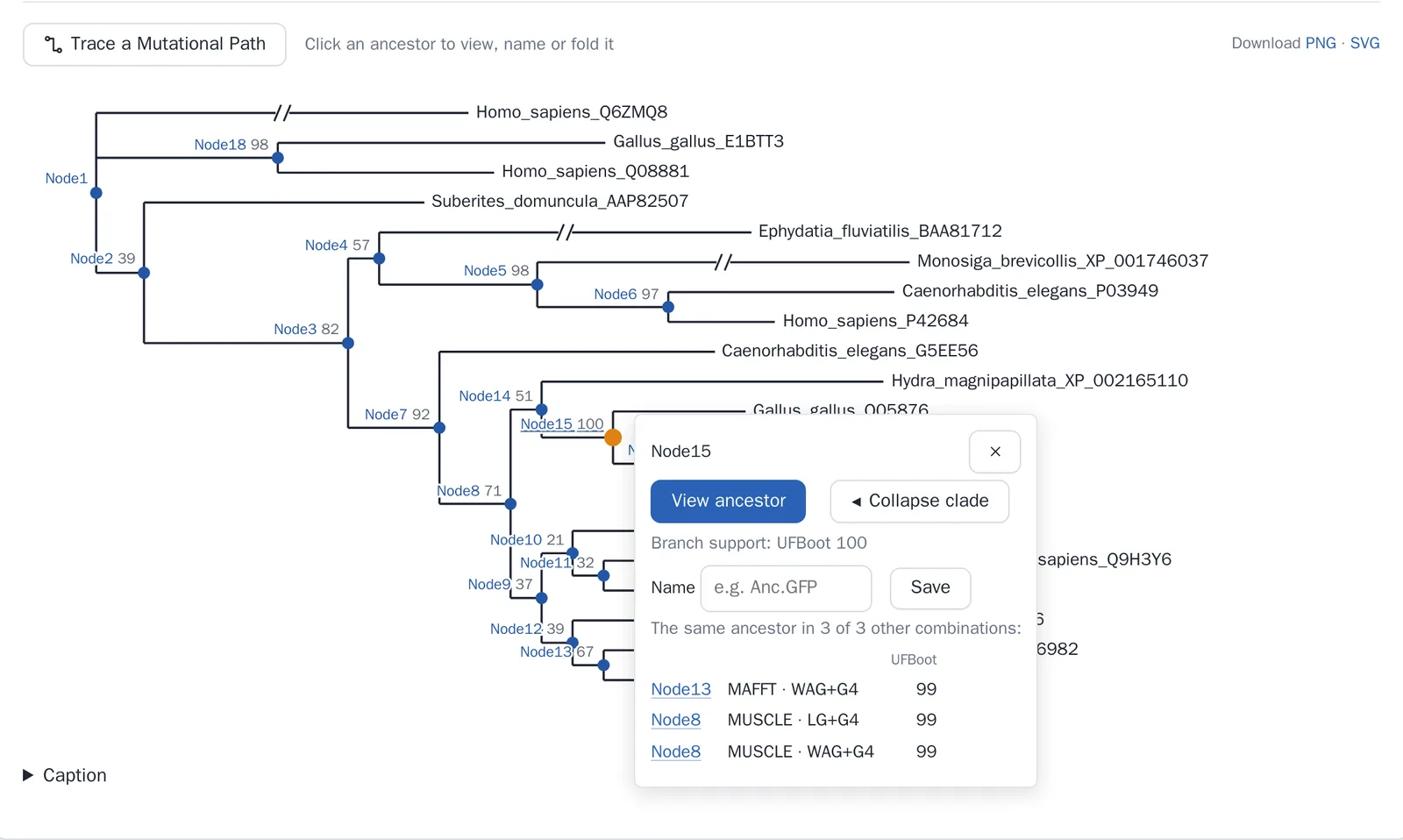
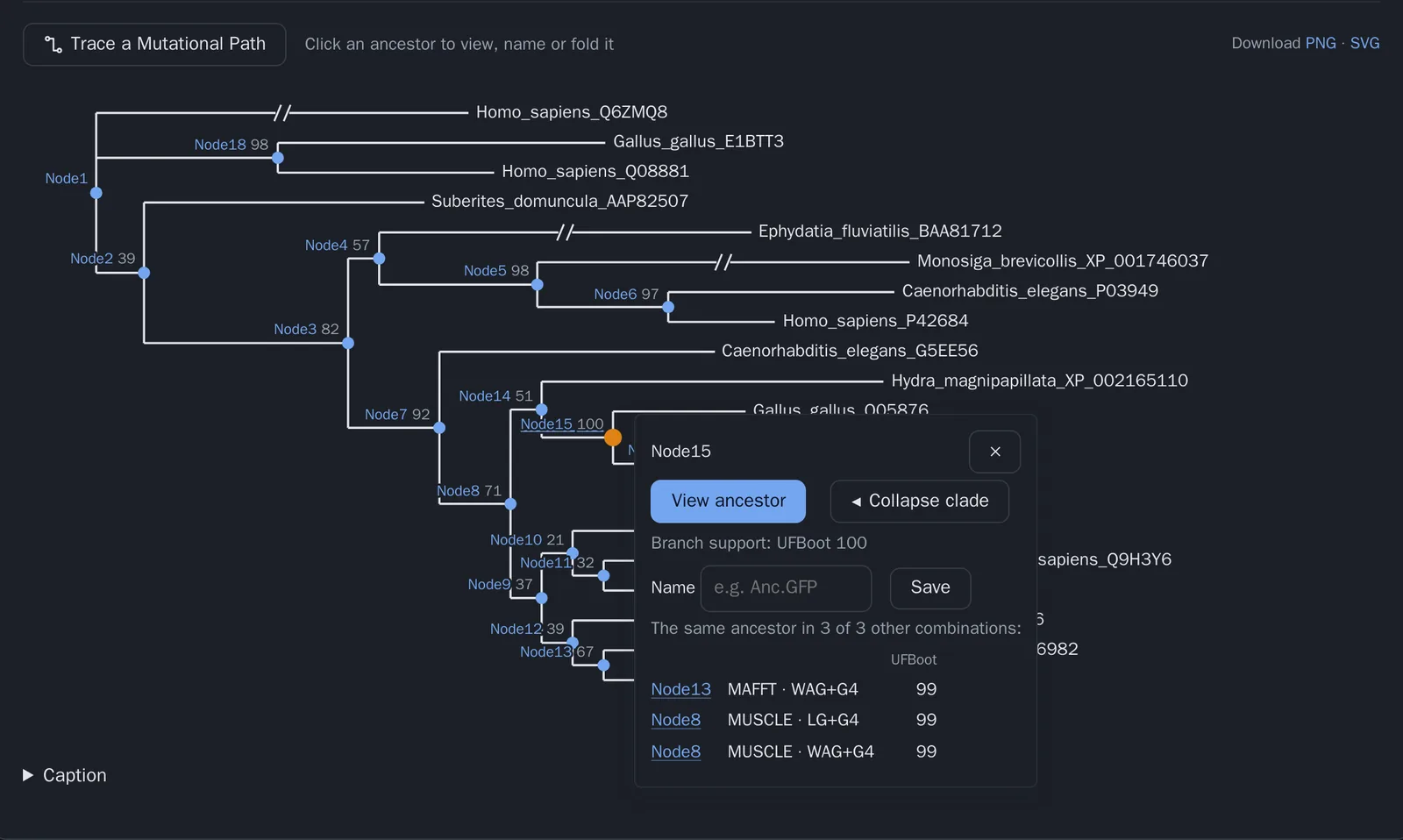
The tree viewer: a phylogeny of twenty kinases with numbered ancestral nodes and support values. One node's panel is open, offering View ancestor, Collapse clade, a name field, and the same ancestor in three other combinations. The tree viewer: a phylogeny of twenty kinases with numbered ancestral nodes and support values. One node's panel is open, offering View ancestor, Collapse clade, a name field, and the same ancestor in three other combinations.
The tree viewer, with one ancestor's panel open.

The Same Ancestor, Across Alignments and Models

An ancestor depends on the alignment, tree and model behind it. PhyloBot finds each ancestor again in every other combination you ran and lays them side by side, so you can see which residues hold and which depend on one choice.
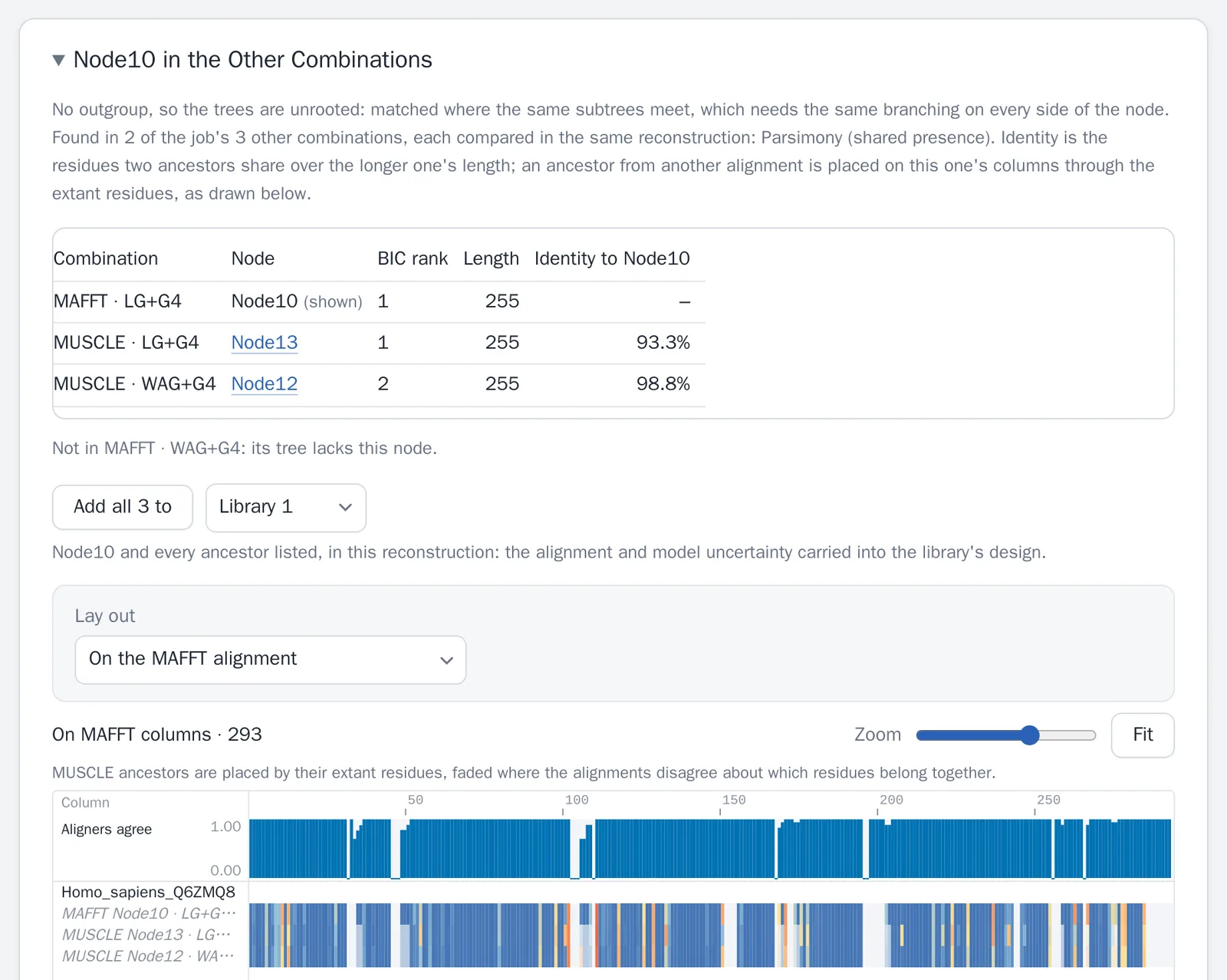
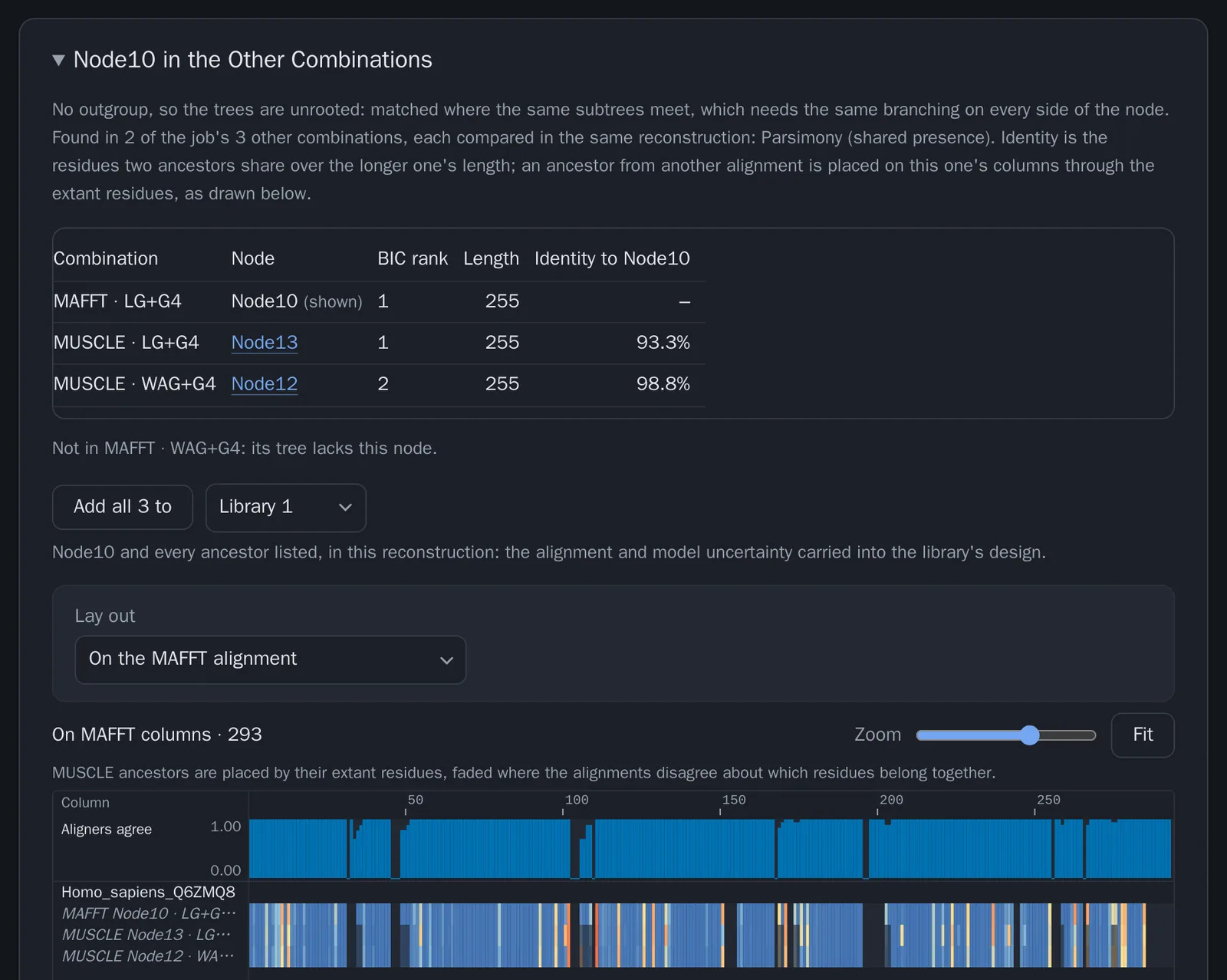
The ancestor viewer's comparison panel: Node10 matched to its counterparts under MUSCLE and under another model, with their identity to it, and the three sequences drawn on one alignment under a track of where the aligners agree. The ancestor viewer's comparison panel: Node10 matched to its counterparts under MUSCLE and under another model, with their identity to it, and the three sequences drawn on one alignment under a track of where the aligners agree.
The ancestor viewer: one ancestor, found again in the job's other alignments and models.

Mutational Paths Between Ancestors

Pick an ancestor and a descendant. PhyloBot lists the substitutions, gains and losses on each branch, and marks which of them the other alignments and models agree on.
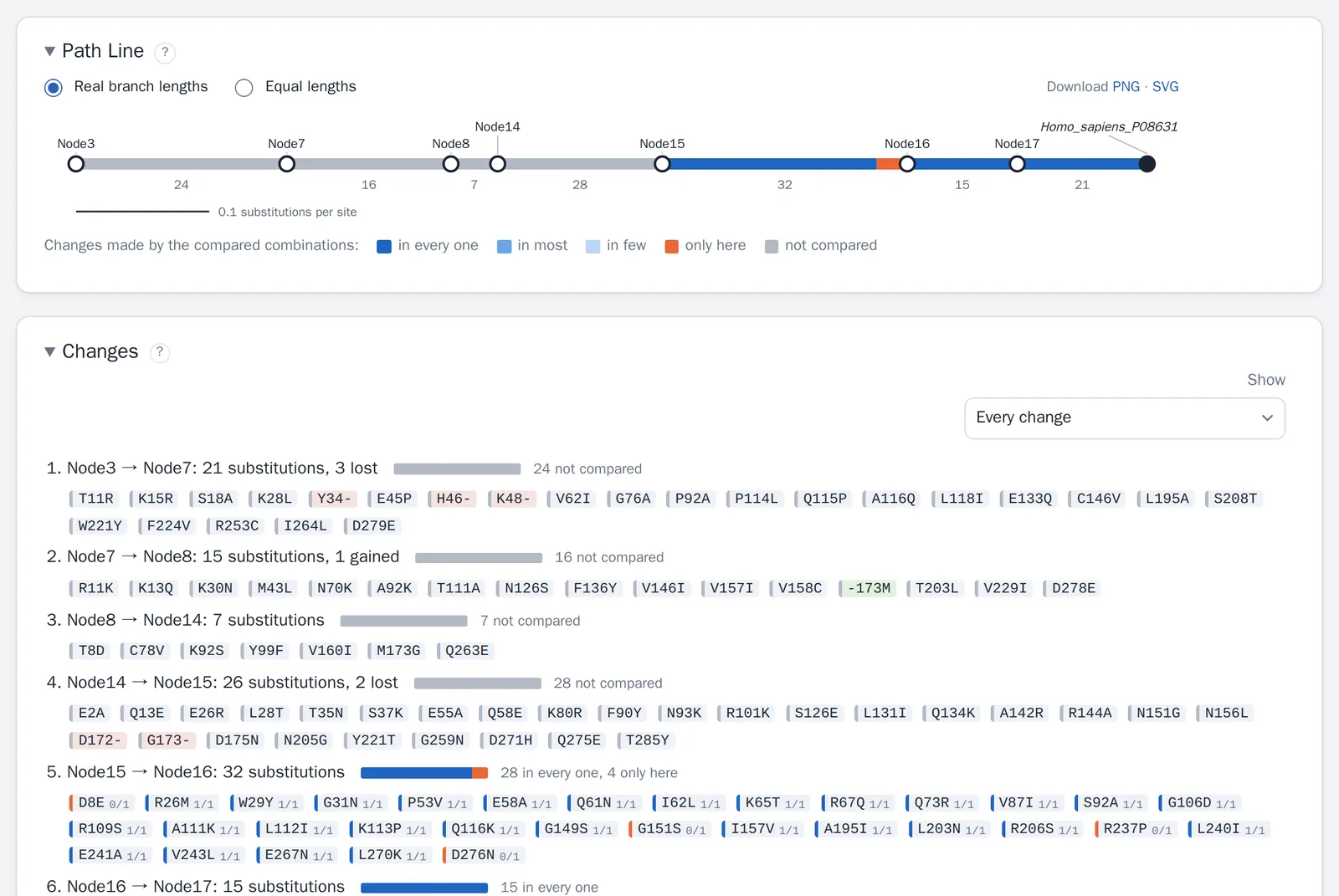
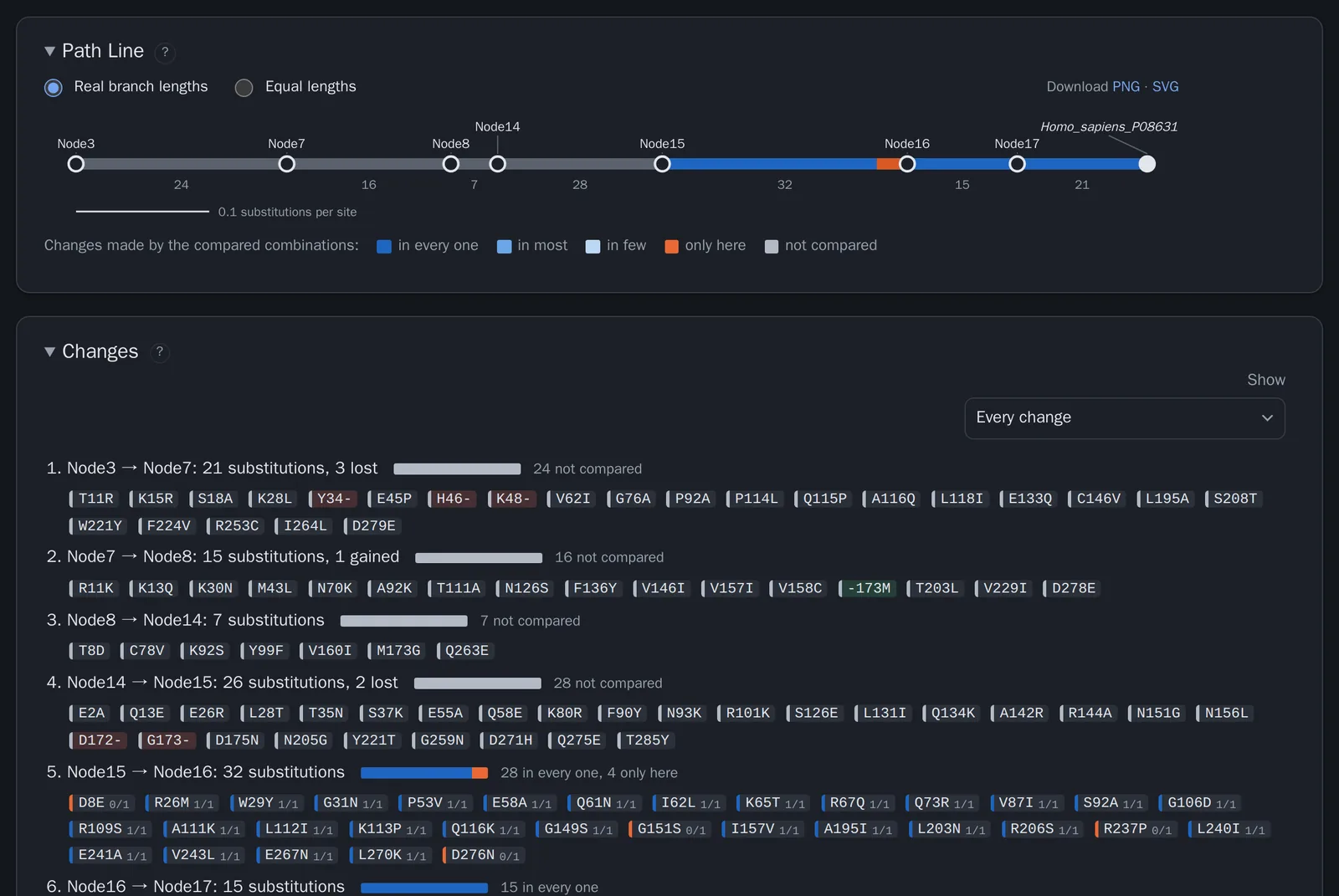
The mutational path page: a line from Node3 through five ancestors to a human kinase, with branch lengths, and under it every change on each branch, such as T11R and K15R, marked by how many other combinations make the same change. The mutational path page: a line from Node3 through five ancestors to a human kinase, with branch lengths, and under it every change on each branch, such as T11R and K15R, marked by how many other combinations make the same change.
The mutational path page: the path drawn to scale, and the changes on each branch.

Ancestors on a Structure

Attach a PDB entry or an AlphaFold model and paint it with an ancestor: its support, or the residues that change along a path. Coordinates are never altered: the page paints, it does not model.
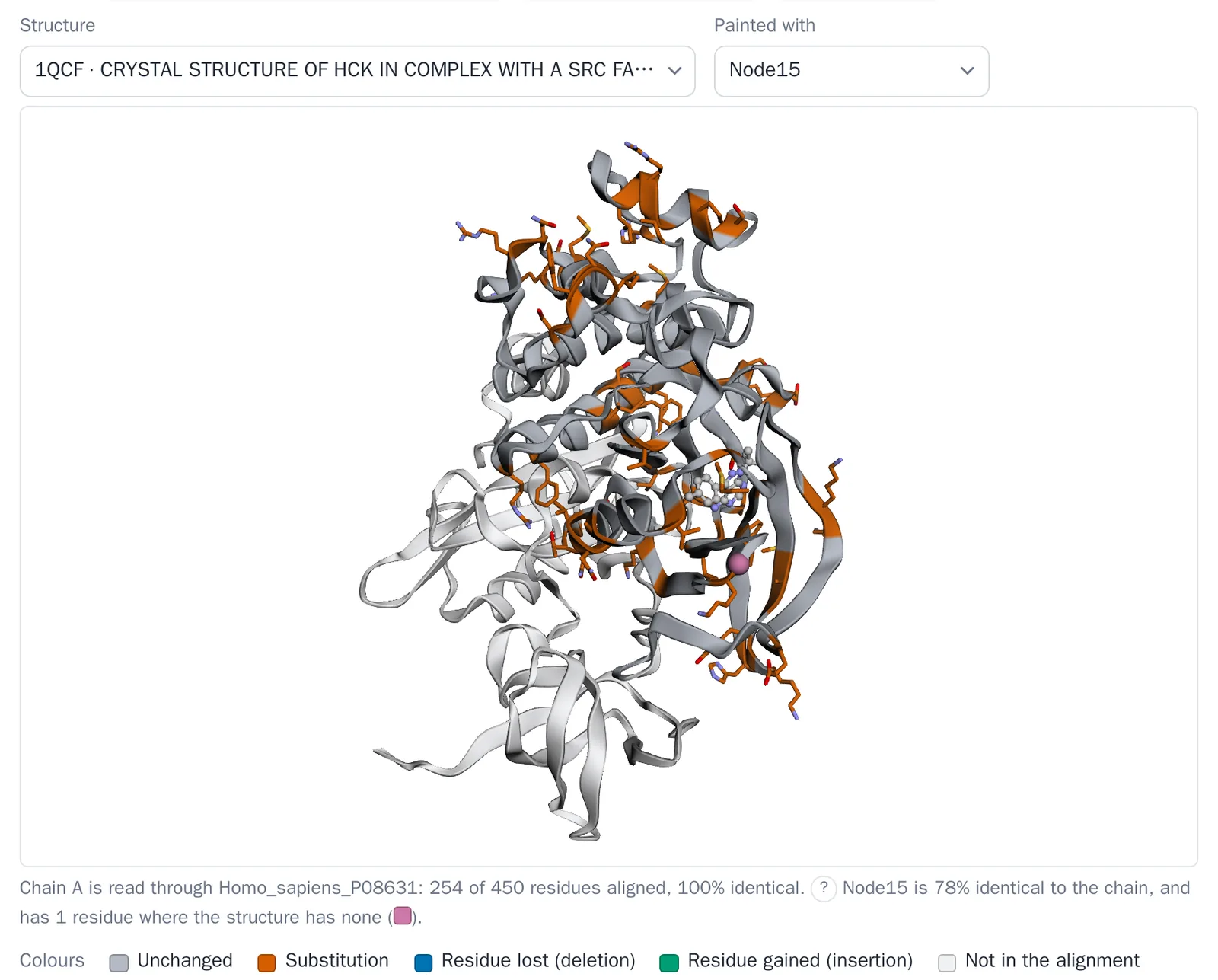
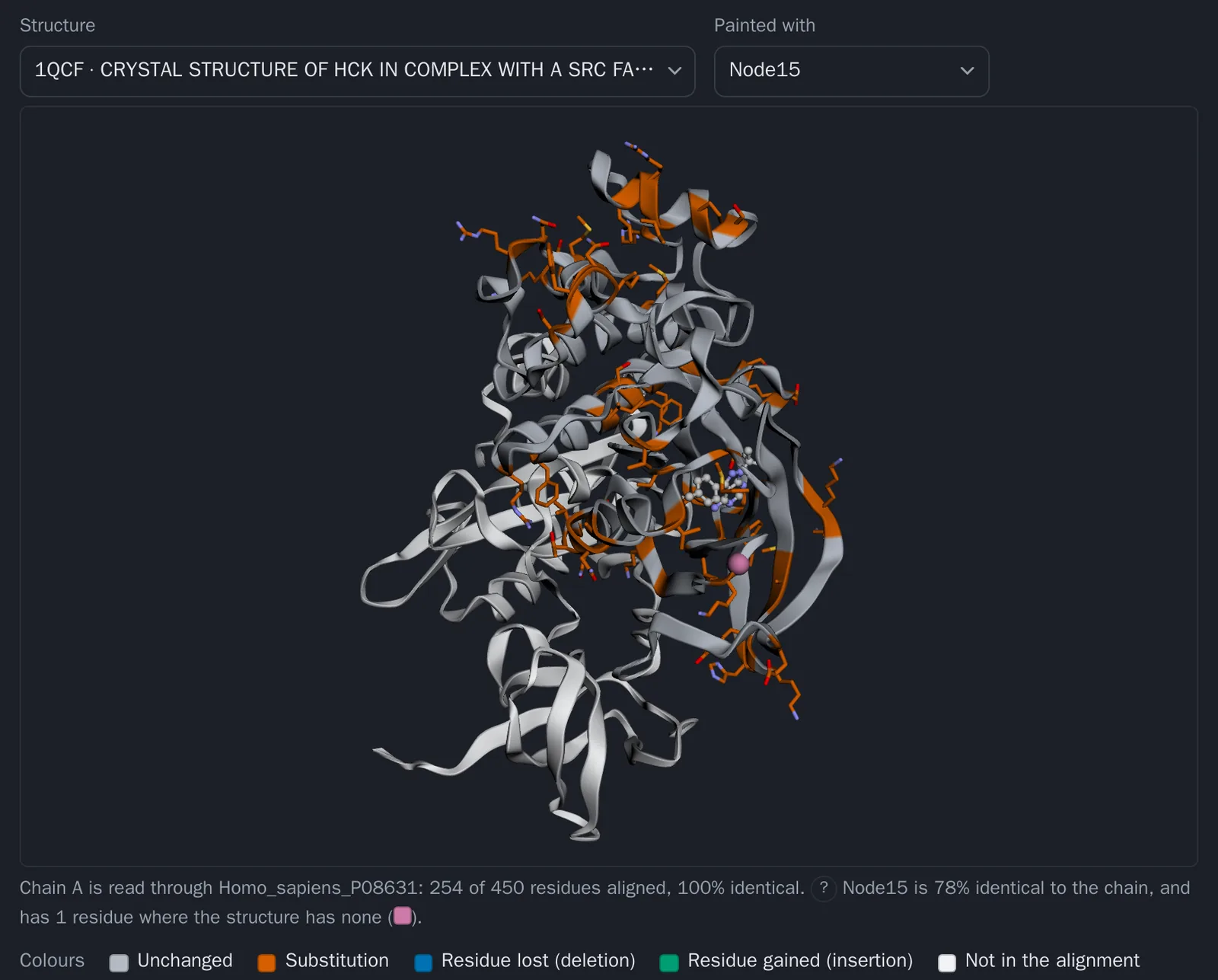
The structure page: a kinase drawn as a grey ribbon in 3D, with the residues that differ between an ancestor and its human descendant in orange, and a legend for unchanged, substituted, lost and gained residues. The structure page: a kinase drawn as a grey ribbon in 3D, with the residues that differ between an ancestor and its human descendant in orange, and a legend for unchanged, substituted, lost and gained residues.
The structure page: the changes between an ancestor and its descendant, on PDB 1QCF.

Biophysical Properties of Ancestors

Net charge, hydrophobic moment and other properties are measured over an ancestor's whole posterior distribution, so each value comes with an interval.
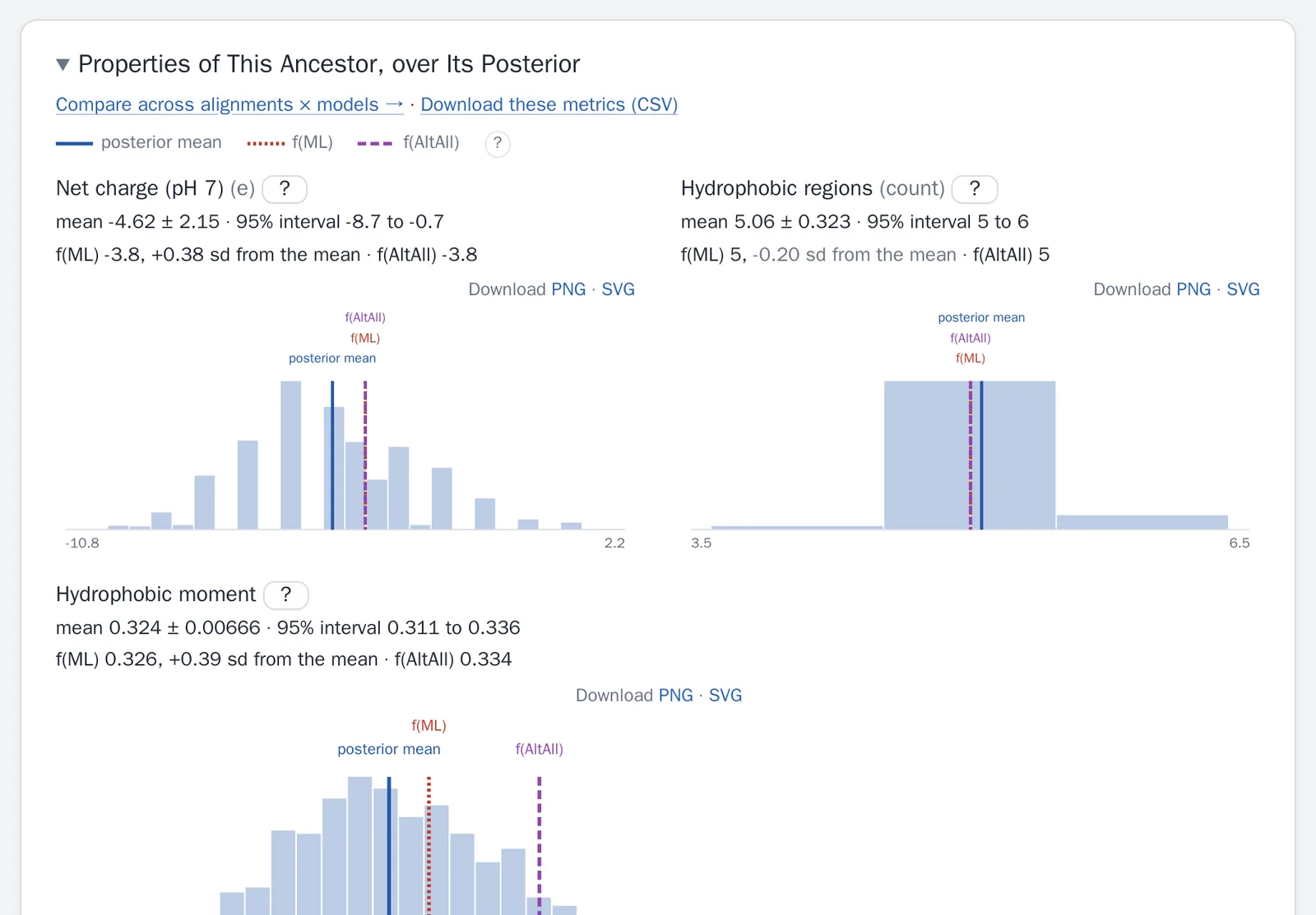
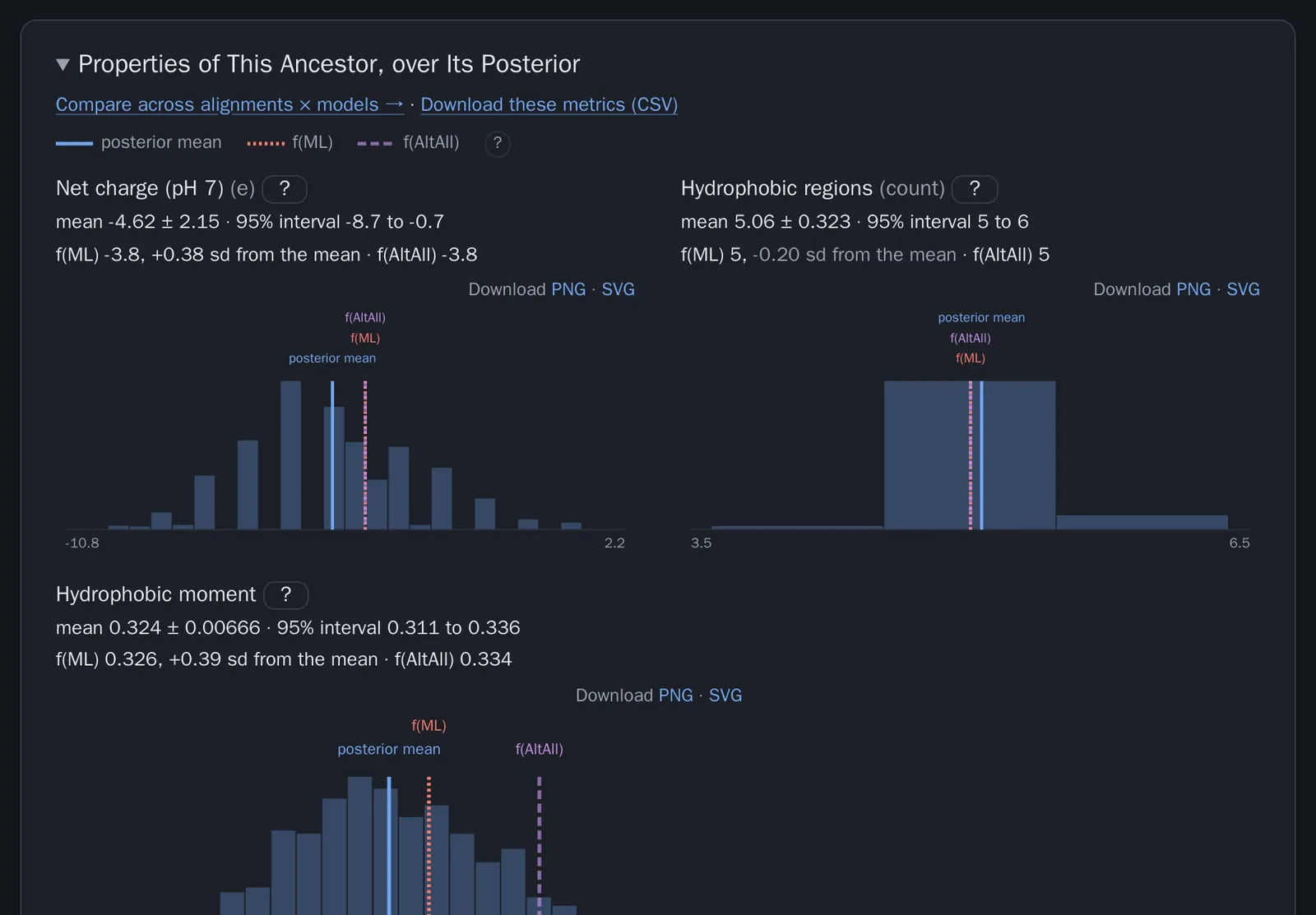
The ancestor viewer's properties panel: histograms of net charge, hydrophobic regions and hydrophobic moment over draws from the ancestor's posterior, each with its mean, 95% interval and the value of the single most likely sequence. The ancestor viewer's properties panel: histograms of net charge, hydrophobic regions and hydrophobic moment over draws from the ancestor's posterior, each with its mean, 95% interval and the value of the single most likely sequence.
The ancestor viewer's properties panel: each property measured over draws from the posterior.

Ancestors Ready for the Bench

Collect ancestors into a library and choose how to cover their uncertain sites within the number of constructs you can order: the most likely sequence, its AltAll control, draws from the posterior. Export named sequences with a manifest and a methods paragraph.
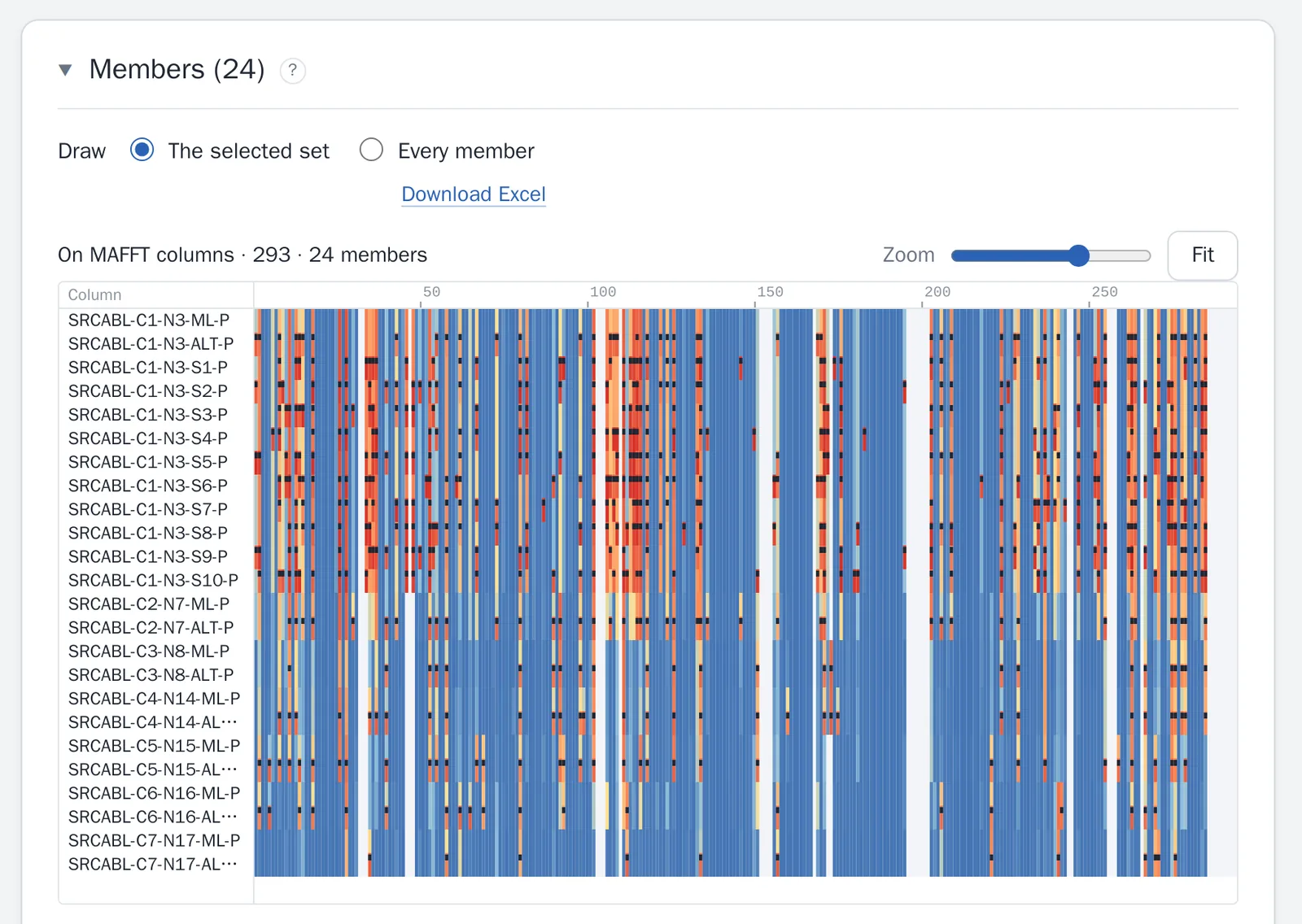
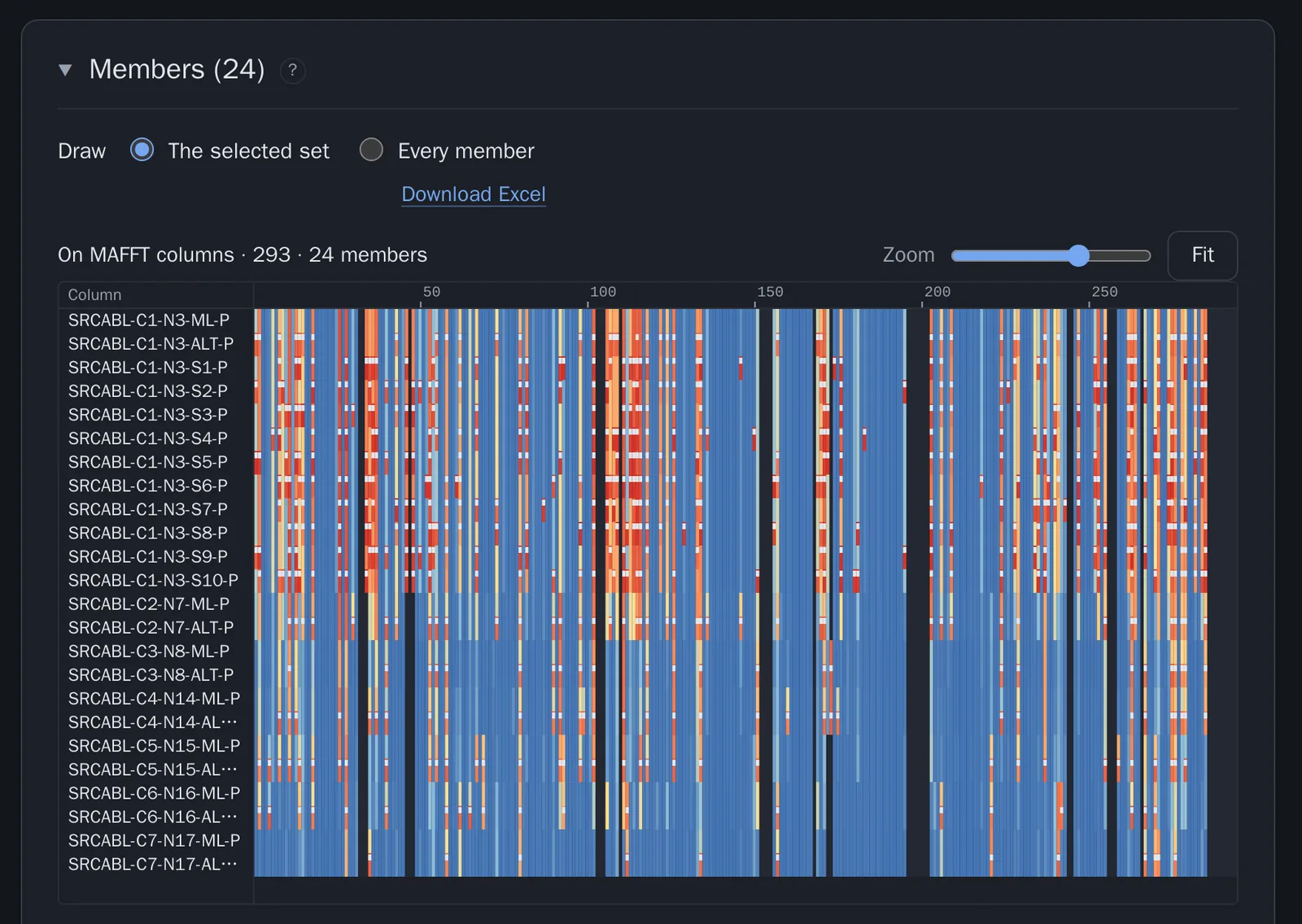
The library page: 24 named constructs from seven ancestors, such as SRCABL-C1-N3-ML-P and its AltAll and posterior draws, drawn as rows coloured by posterior probability on one alignment. The library page: 24 named constructs from seven ancestors, such as SRCABL-C1-N3-ML-P and its AltAll and posterior draws, drawn as rows coloured by posterior probability on one alignment.
An ancestral library: every construct named, with its controls, drawn on one alignment.

Why Reconstruct Ancestors

  • AI & Generative Protein Design

    Ancestors are functional sequences, filtered by evolution, that modern databases do not hold: stable scaffolds to start from, and out-of-distribution data for training generative models and testing fitness predictors.

  • Gene Therapy & Vector Engineering

    Ancestral capsids and viral enzymes, such as AAVs and Cas endonucleases, are robust starting templates with better packaging, new PAM specificities, or less pre-existing immune recognition.

  • Evolutionary & Mechanistic Biology

    Find the mutations behind a historical shift in function, an allosteric transition or an adaptation, without getting lost in modern neutral drift.

Confidence You Can Measure

An ancestor is an estimate. PhyloBot 2 is built so you can see how far to trust one.

  • One Alignment Is One Opinion

    Every combination of aligner, tree and model runs as its own traceable analysis, ranked by BIC, with the same ancestor matched across all of them.

  • Tested Against Known Answers

    The pipeline is tested continuously on simulated families whose true ancestors are known, and thresholds on those tests guard every change.

  • Gaps Placed on Purpose

    Five ways to decide where an ancestor had no residue, each scored on simulations with insertions and deletions. The unmasked reconstruction is always kept.

  • Pinned, Local, Open

    Every tool is pinned to an exact version. It runs on your own computer with no account, and nothing leaves it unless you ask for a lookup, such as a homolog search.

The long version: what is distinctive about PhyloBot 2

As far as we can tell from the literature and the tools we know of (see Related work), the combination below is not available elsewhere. Several individual pieces are done well by other tools, and we say so there.

  1. Robustness across alignments, trees and models, by design. An ancestor is an estimate that depends on the alignment, the tree and the substitution model behind it. PhyloBot 2 runs every combination you choose β€” up to four aligners (MAFFT, MUSCLE 5, Clustal Omega, PRANK) and your own alignments; tree searches by IQ-TREE and RAxML-NG and your own trees; any set of fixed models and a ModelFinder search β€” as separate, fully traceable analyses. It ranks the models within each alignment by BIC, with AIC/AICc/BIC weights, and presents the ancestors of each combination side by side, so you can see which conclusions hold across reasonable choices and which do not.
  2. A choice of gap-placement methods, each validated. Maximum-likelihood ASR places a residue at every alignment column, so raw ancestors are much longer than any real protein. PhyloBot 2 keeps the unmasked reconstruction and adds a version for each method you choose: parsimony by shared presence, Fitch parsimony, maximum likelihood on the gap/residue pattern (with per-site gap probabilities), and the indel-aware reconstructions of PRANK and GRASP. Each method is scored against simulated protein families with known ancestors that include insertions and deletions, averaged over replicates, and the defaults were chosen from those results.
  3. Correctness checked against known answers. The pipeline is tested continuously on simulated datasets whose true ancestors are known. The tests also rerun each dataset with the true alignment and/or true tree supplied, to separate error from alignment, from tree inference, and from the reconstruction itself. Thresholds on these tests guard every change to the pipeline.
  4. Mutational paths between ancestors. Pick any ancestor and any of its descendants (another ancestor or an extant sequence), and PhyloBot 2 traces the path between them. It lists the substitutions, gains, and losses on each branch; shows every sequence along the path with each residue's posterior probability, outlining what changed on each branch; lets you add extant sequences for comparison; and exports it all to Excel. Exploring these trajectories was the feature the original PhyloBot introduced, and we have not found it elsewhere for protein ancestors.
  5. Ancestors you can inspect. The ancestor viewer shows one ancestral node site by site, with its full posterior distribution at each site, plots of how well supported the node is and where it is uncertain, and extant sequences alongside. The tree viewer shows each tree with clickable ancestral nodes and branch support, with branch lengths that can be adjusted so very short and very long branches stay readable. Colour palettes, line styles and page skins can be changed for accessibility, and plots and tables download as PNG, SVG and Excel.
  6. Homologs you choose yourself. Starting from a single protein, a BLAST search at EBI (UniRef90) or NCBI returns hits that you filter and review β€” with histograms of coverage and identity, and hand-picked additions or removals β€” before they become a job. Which sequences go in stays your decision.
  7. Runs where you are. The same pipeline runs from the command line with only Docker, as a local web app (no accounts; nothing leaves your machine unless you choose a homolog search, which asks first), or as a hosted service. Every tool is pinned to an exact version for reproducibility.
Compare with 8 other tools, feature by feature

Feature Comparison

How PhyloBot 2 compares with its predecessor and with other tools for ASR, feature by feature. Hover over a mark for details.

yes Β· partial or limited Β· no Β· in progress or planned Β· not yet verified

FeaturePhyloBot 2PhyloBot 2016FireProtASR 2.0TopiaryGRASPAP-LASRMEGA 12IQ-TREE 3PAML
Use & automation
Graphical interfaceyes: webyes: webyes: webpartial: HTML reportyes: webunsureyes: desktopnono
Automates the whole workflowyesyesyesyesnoyesnonono
Runs locally / offlineyespartialnoyesyesyesyesyesyes
Same pipeline on laptop, HPC, cloudpartial: cloud not deployednonopartialpartialnonoyesno
Usable without a web stack (CLI only)yes: Nextflownonoyesyesyespartial: MEGA-CCyesyes
Data
Homology searchyes: reviewed BLASTnoyesyesnoyespartialnono
Dataset curation (redundancy, taxonomy, essential residues)partial: filtersnoyesyesnoyes, not yet verifiednonono
Species lookup from headers / accessionsyesnonoyesnonononono
Sequence alignmentyes: 4 alignersyes: 2yes: 1yes: 1noyes: 1yes: 2nono
Alignment viewer & editoryesnopartialnopartialnoyesnono
Bring your own alignment / treeyes: bothunsurepartialyesyes: requiredunsureyesyesyes
Amino acidsyesyesyesyesyesyesyesyesyes
Codons (coding DNA)yesnononononoyesyesyes
Models & trees
Model fitting / selectionyes: ModelFinder + BIC rankingpartialyesyesnoyesyesyespartial: by hand
ML tree inferenceyes: IQ-TREE + RAxML-NGyesyesyesnoyesyesyespartial
Branch supportyes: SH-aLRT, UFBootyesyes, not yet verifiedyesnounsureyesyesno
Rootingyes: outgroup / midpointyes: outgroupyes: automaticyes: via species treenounsureyespartialno
Gene/species-tree reconciliationyes: GeneRaxnonoyes: GeneRaxnonopartialnono
Topology tests (AU)yesnonononononoyesno
Ancestors
Ancestral state inference with posteriorsyesyesyesyesyesyesyesyesyes
Gap/indel placementyes: 5 methodspartial: 1yes: 1partial: 1?yes: severalpartial, not yet verifiednonono
Alternative ancestors (AltAll, samples)yesnopartial: VAEyes, not yet verifiedyesyesnonono
Design libraries of scaffoldsyes: budgeted, validatednopartialnopartial: indel variantsyesnonono
Mutational trajectories between ancestorsyesyesno: (predicts forward)nononononono
Same ancestor matched across analysesyesnononononononono
Interactive tree & ancestor viewersyesyesyes: logospartialyesnoyesnono
Robustness
Alignment uncertaintyyes: aligners side by sideyesnonononononono
Tree uncertaintyyes: tree sources, AU, supportpartialnopartialnononopartialno
Model uncertainty (ancestors across models)yesyesnonononononono
Calibrate state uncertaintyplanned: in progressnononononononono
Selection
dN/dS (site models, free ratios)yes: codemlnononononopartial: Z-testspartialyes
Branch-site testyes: from tree viewernononononononoyes
Synonymous / non-synonymous changes on pathsyesnononononononono
Simulation & validation
Simulate sequences (incl. indels, duplication/loss)yes: AliSimnonononononoyes: AliSimyes: evolver
Benchmark accuracy against known truthyes: golden + oracle inputsnopartial: paperpartial: paperpartial: papernononono
Reproducibility & practicalities
Pinned containers, seeds, provenanceyesnonopartialnononopartial: seedsno
Figure & table exports (SVG/PNG/Excel/ZIP)yespartialyesyespartialnoyesnono
Accessibility (palettes, skins, line styles)yesnononononononono
Work estimate & usage accountingyesnononononononono
Open sourceyes: BSDyesno: serveryespartial: no licenceyes, not yet verifiedpartial: free, closedyesyes
Gaps for PhyloBot 2
Functional loci predictionno: not rebuiltyespartialnononononono
Forward / successor predictionplanned: roadmapnoyesnononononono
Protein structuresplanned: roadmapnounsurenononononono
Dating / timetreesnonononononoyespartialyes

Quick Start

Needs Docker and make. Three commands, then open http://localhost:8000.

Run on Your Local Computer

curl -L https://github.com/headwatersdiscovery/phylobot2/releases/latest/download/phylobot.tar.gz | tar xz
cd phylobot
make up

Downloads PhyloBot and starts it. The first run builds the images, so allow a while.

Developers: Clone the Repository

git clone https://github.com/headwatersdiscovery/phylobot2.git

For development, or to follow updates with git pull. PhyloBot is open source under the BSD 3-Clause License; feel free to edit or expand its code, but please cite and attribute our work.

How to Cite PhyloBot

Hanson-Smith V, Johnson A. PhyloBot: A Web Portal for Automated Phylogenetics, Ancestral Sequence Reconstruction, and Exploration of Mutational Trajectories. PLoS Computational Biology 12(7): e1004976 (2016). doi:10.1371/journal.pcbi.1004976

PhyloBot 2 is a ground-up rewrite of the PhyloBot this paper describes. If you use it in published work, please cite the paper together with the methods your analysis used. The repository's CITATION.cff has the same information for citation managers.

Included Methods

PhyloBot 2 is a workflow around other people's methods. Please cite the ones your analysis used.

Multiple sequence alignment MAFFT, MUSCLE, Clustal Omega, PRANK
  • MAFFT (7.525)
    Katoh K, Standley DM. MAFFT Multiple Sequence Alignment Software Version 7: Improvements in Performance and Usability. Molecular Biology and Evolution 30(4): 772–780 (2013). doi:10.1093/molbev/mst010
  • MUSCLE (5.3)
    Edgar RC. Muscle5: High-accuracy alignment ensembles enable unbiased assessments of sequence homology and phylogeny. Nature Communications 13: 6968 (2022). doi:10.1038/s41467-022-34630-w
  • Clustal Omega (1.2.4)
    Sievers F, Wilm A, Dineen D, et al. Fast, scalable generation of high-quality protein multiple sequence alignments using Clustal Omega. Molecular Systems Biology 7: 539 (2011). doi:10.1038/msb.2011.75
  • PRANK (v.250331; phylogeny-aware, keeps independent insertions apart)
    LΓΆytynoja A, Goldman N. An algorithm for progressive multiple alignment of sequences with insertions. PNAS 102(30): 10557–10562 (2005). doi:10.1073/pnas.0409137102
    LΓΆytynoja A, Goldman N. Phylogeny-aware gap placement prevents errors in sequence alignment and evolutionary analysis. Science 320(5883): 1632–1635 (2008). doi:10.1126/science.1158395
Phylogeny, model selection and branch support IQ-TREE, RAxML-NG, GeneRax, Open Tree of Life, UniProt, AU test, ModelFinder, Model comparison, UFBoot, SH-aLRT
  • IQ-TREE (3.1.3; tree search, model fitting, ancestral reconstruction)
    Wong TKF, Ly-Trong N, Ren H, et al. IQ-TREE 3: phylogenomic inference software using complex evolutionary models. Molecular Biology and Evolution 43(5): msag117 (2026). doi:10.1093/molbev/msag117
  • RAxML-NG (2.0.3; a second tree search, whose trees IQ-TREE then fits)
    Kozlov AM, Darriba D, Flouri T, Morel B, Stamatakis A. RAxML-NG: a fast, scalable and user-friendly tool for maximum likelihood phylogenetic inference. Bioinformatics 35(21): 4453–4455 (2019). doi:10.1093/bioinformatics/btz305
    Kozlov O, Togkousidis A, Stelz C, et al. RAxML-NG 2: Automatic model selection, novel tree search heuristics, and fast branch support metrics. bioRxiv preprint (2026). doi:10.64898/2026.09.09.750097
  • GeneRax (2.1.3; reconciles each tree with the species tree, and searches a reconciled tree)
    Morel B, Kozlov AM, Stamatakis A, SzΓΆllΕ‘si GJ. GeneRax: a tool for species-tree-aware maximum likelihood-based gene family tree inference under gene duplication, transfer, and loss. Molecular Biology and Evolution 37(9): 2763–2774 (2020). doi:10.1093/molbev/msaa141
  • Open Tree of Life (the species tree for reconciliation (synthetic tree and taxonomy; the release is recorded with each job))
    Hinchliff CE, Smith SA, Allman JF, et al. Synthesis of phylogeny and taxonomy into a comprehensive tree of life. Proceedings of the National Academy of Sciences 112(41): 12764–12769 (2015). doi:10.1073/pnas.1423041112
    Redelings BD, Holder MT. A supertree pipeline for summarizing phylogenetic and taxonomic information for millions of species. PeerJ 5: e3058 (2017). doi:10.7717/peerj.3058
  • UniProt (species read from UniProt entry names (its controlled vocabulary of species, CC BY 4.0, bundled) and from UniProt accessions, with consent)
    The UniProt Consortium. UniProt: the Universal Protein Knowledgebase in 2025. Nucleic Acids Research 53(D1): D609–D617 (2025). doi:10.1093/nar/gkae1010
  • AU test (in IQ-TREE; is each tree source's topology rejected by the sequences?)
    Shimodaira H. An approximately unbiased test of phylogenetic tree selection. Systematic Biology 51(3): 492–508 (2002). doi:10.1080/10635150290069913
  • ModelFinder (in IQ-TREE)
    Kalyaanamoorthy S, Minh BQ, Wong TKF, von Haeseler A, Jermiin LS. ModelFinder: fast model selection for accurate phylogenetic estimates. Nature Methods 14: 587–589 (2017). doi:10.1038/nmeth.4285
  • Model comparison (AIC, AICc and BIC, with weights)
    Akaike H. A new look at the statistical model identification. IEEE Transactions on Automatic Control 19(6): 716–723 (1974). doi:10.1109/TAC.1974.1100705
    Hurvich CM, Tsai CL. Regression and time series model selection in small samples. Biometrika 76(2): 297–307 (1989). doi:10.1093/biomet/76.2.297
    Schwarz G. Estimating the Dimension of a Model. Annals of Statistics 6(2): 461–464 (1978). doi:10.1214/aos/1176344136
  • UFBoot (ultrafast bootstrap)
    Hoang DT, Chernomor O, von Haeseler A, Minh BQ, Vinh LS. UFBoot2: Improving the Ultrafast Bootstrap Approximation. Molecular Biology and Evolution 35(2): 518–522 (2018). doi:10.1093/molbev/msx281
  • SH-aLRT (SH-like approximate likelihood ratio test)
    Guindon S, Dufayard JF, Lefort V, Anisimova M, Hordijk W, Gascuel O. New Algorithms and Methods to Estimate Maximum-Likelihood Phylogenies: Assessing the Performance of PhyML 3.0. Systematic Biology 59(3): 307–321 (2010). doi:10.1093/sysbio/syq010
Ancestral sequence reconstruction Empirical Bayes (marginal) reconstruction
  • Empirical Bayes (marginal) reconstruction (IQ-TREE --ancestral)
    Yang Z, Kumar S, Nei M. A new method of inference of ancestral nucleotide and amino acid sequences. Genetics 141(4): 1641–1650 (1995). doi:10.1093/genetics/141.4.1641
Gaps in ancestral sequences Parsimony (shared presence), Parsimony (Fitch), Maximum likelihood, PRANK, GRASP
  • Parsimony (shared presence) (PhyloBot's own rule: a residue only where it is present on both sides of a node)
  • Parsimony (Fitch) (Hartigan's rule for multifurcations)
    Fitch WM. Toward Defining the Course of Evolution: Minimum Change for a Specific Tree Topology. Systematic Zoology 20(4): 406–416 (1971). doi:10.2307/2412116
    Hartigan JA. Minimum Mutation Fits to a Given Tree. Biometrics 29(1): 53–65 (1973). doi:10.2307/2529676
  • Maximum likelihood (the gap/residue pattern reconstructed by IQ-TREE under a two-state model on the fixed tree)
    Wong TKF, Ly-Trong N, Ren H, et al. IQ-TREE 3: phylogenomic inference software using complex evolutionary models. Molecular Biology and Evolution 43(5): msag117 (2026). doi:10.1093/molbev/msag117
  • PRANK (its own indel-aware ancestors (-showanc))
    LΓΆytynoja A, Goldman N. An algorithm for progressive multiple alignment of sequences with insertions. PNAS 102(30): 10557–10562 (2005). doi:10.1073/pnas.0409137102
    LΓΆytynoja A, Goldman N. Phylogeny-aware gap placement prevents errors in sequence alignment and evolutionary analysis. Science 320(5883): 1632–1635 (2008). doi:10.1126/science.1158395
  • GRASP (2.0.0; joint reconstruction, bi-directional edge parsimony for indels)
    Foley G, Mora A, Ross CM, et al. Engineering indel and substitution variants of diverse and ancient enzymes using Graphical Representation of Ancestral Sequence Predictions (GRASP). PLoS Computational Biology 18(10): e1010633 (2022). doi:10.1371/journal.pcbi.1010633
Ancestral libraries AltAll, Posterior samples, Single-site alternates, Most supported, Spanning, Per ancestor
  • AltAll (one sequence carrying the alternative state at every ambiguous site: the ASR literature's robustness control, and a library's second well)
    Eick GN, Bridgham JT, Anderson DP, Harms MJ, Thornton JW. Robustness of Reconstructed Ancestral Protein Functions to Statistical Uncertainty. Molecular Biology and Evolution 34(2): 247–261 (2017). doi:10.1093/molbev/msw223
  • Posterior samples (draws from IQ-TREE's per-site marginal posteriors (no joint distribution is available), which Eick et al. use alongside AltAll to explore plausible sequences)
    Eick GN, Bridgham JT, Anderson DP, Harms MJ, Thornton JW. Robustness of Reconstructed Ancestral Protein Functions to Statistical Uncertainty. Molecular Biology and Evolution 34(2): 247–261 (2017). doi:10.1093/molbev/msw223
    Wong TKF, Ly-Trong N, Ren H, et al. IQ-TREE 3: phylogenomic inference software using complex evolutionary models. Molecular Biology and Evolution 43(5): msag117 (2026). doi:10.1093/molbev/msag117
  • Single-site alternates (one well per ambiguous site, or per pair: site-wise diversification around the ancestor)
    VanAntwerp J, Finneran P, Dolgikh B, Woldring D. Ancestral Sequence Reconstruction and Alternate Amino Acid States Guide Protein Library Design for Directed Evolution. Methods in Molecular Biology 2491: 75–86 (2022). doi:10.1007/978-1-0716-2285-8_4
  • Most supported (PhyloBot's own: the sequences that the most distinct choices of aligner, model and gap placement agree on, ranked by their summed BIC weight. The inspiration is model averaging, where a result is weighted by how well each model fits rather than taken from one)
    Posada D, Buckley TR. Model Selection and Model Averaging in Phylogenetics: Advantages of Akaike Information Criterion and Bayesian Approaches over Likelihood Ratio Tests. Systematic Biology 53(5): 793–808 (2004). doi:10.1080/10635150490522304
  • Spanning (PhyloBot's own: greedy max–min (farthest-first) selection, so the wells cover the disagreement between reconstructions instead of holding near-identical variants. The algorithm is the standard k-centre greedy traversal; its use here is not a published ASR method, and on PhyloBot's own simulated test it did not improve accuracy over Most supported)
    Gonzalez TF. Clustering to minimize the maximum intercluster distance. Theoretical Computer Science 38: 293–306 (1985). doi:10.1016/0304-3975(85)90224-5
  • Per ancestor (PhyloBot's own: equal shares of the wells per ancestor, round robin, for a library over a lineage. An allocation rule, with no published precedent and no statistical claim)
Sequence properties Physicochemical descriptors, metapredict, ESM-2
  • Physicochemical descriptors (measured over an ancestral posterior: net charge, the hydrophobic moment on the Eisenberg scale and hydropathy runs on Kyte–Doolittle, summarised by PhyloBot's own windows and thresholds)
    Eisenberg D, Weiss RM, Terwilliger TC. The helical hydrophobic moment: a measure of the amphiphilicity of a helix. Nature 299: 371–374 (1982). doi:10.1038/299371a0
    Eisenberg D, Schwarz E, Komaromy M, Wall R. Analysis of membrane and surface protein sequences with the hydrophobic moment plot. Journal of Molecular Biology 179(1): 125–142 (1984). doi:10.1016/0022-2836(84)90309-7
    Kyte J, Doolittle RF. A simple method for displaying the hydropathic character of a protein. Journal of Molecular Biology 157(1): 105–132 (1982). doi:10.1016/0022-2836(82)90515-0
  • metapredict (3.0.2 (V3 network): the disordered fraction of an ancestor, optional)
    Emenecker RJ, Griffith D, Holehouse AS. Metapredict: a fast, accurate, and easy-to-use predictor of consensus disorder and structure. Biophysical Journal 120(20): 4312–4319 (2021). doi:10.1016/j.bpj.2021.08.039
    Lotthammer JM, HernΓ‘ndez-GarcΓ­a J, Griffith D, Weijers D, Holehouse AS, Emenecker RJ. Metapredict enables accurate disorder prediction across the Tree of Life. bioRxiv 2024.11.05.622168 (2024), preprint. doi:10.1101/2024.11.05.622168
  • ESM-2 (35M parameters (esm2_t12_35M_UR50D): how natural an ancestor looks to a protein language model, optional)
    Lin Z, Akin H, Rao R, Hie B, Zhu Z, Lu W, et al. Evolutionary-scale prediction of atomic-level protein structure with a language model. Science 379(6637): 1123–1130 (2023). doi:10.1126/science.ade2574
Homolog search BLAST, EMBL-EBI Job Dispatcher, UniRef90, NCBI BLAST
  • BLAST (blastp)
    Camacho C, Coulouris G, Avagyan V, et al. BLAST+: architecture and applications. BMC Bioinformatics 10: 421 (2009). doi:10.1186/1471-2105-10-421
  • EMBL-EBI Job Dispatcher (remote searches at EBI)
    Madeira F, Madhusoodanan N, Lee J, et al. The EMBL-EBI Job Dispatcher sequence analysis tools framework in 2024. Nucleic Acids Research 52(W1): W521–W525 (2024). doi:10.1093/nar/gkae241
  • UniRef90 (the database searched at EBI)
    Suzek BE, Wang Y, Huang H, McGarvey PB, Wu CH, UniProt Consortium. UniRef clusters: a comprehensive and scalable alternative for improving sequence similarity searches. Bioinformatics 31(6): 926–932 (2015). doi:10.1093/bioinformatics/btu739
  • NCBI BLAST (ClusteredNR; local mode only)
    National Center for Biotechnology Information. BLAST web service. https://blast.ncbi.nlm.nih.gov/
Workflow and testing Nextflow, BioContainers, DendroPy, AliSim
  • Nextflow (runs the pipeline)
    Di Tommaso P, Chatzou M, Floden EW, Barja PP, Palumbo E, Notredame C. Nextflow enables reproducible computational workflows. Nature Biotechnology 35: 316–319 (2017). doi:10.1038/nbt.3820
  • BioContainers (the pinned tool images)
    da Veiga Leprevost F, GrΓΌning BA, Alves Aflitos S, et al. BioContainers: an open-source and community-driven framework for software standardization. Bioinformatics 33(16): 2580–2582 (2017). doi:10.1093/bioinformatics/btx192
  • DendroPy (tree handling in PhyloBot's own steps)
    Moreno MA, Holder MT, Sukumaran J. DendroPy 5: a mature Python library for phylogenetic computing. Journal of Open Source Software 9(101): 6943 (2024). doi:10.21105/joss.06943
  • AliSim (the simulated test datasets with known ancestors)
    Ly-Trong N, Naser-Khdour S, Lanfear R, Minh BQ. AliSim: A Fast and Versatile Phylogenetic Sequence Simulator for the Genomic Era. Molecular Biology and Evolution 39(5): msac092 (2022). doi:10.1093/molbev/msac092
Substitution Models The amino-acid matrices and the rate and frequency variants on offer

Models are chosen from a fixed catalog, as an amino-acid matrix plus a rate and frequency variant (for example LG+F+G4). Every one can be used as a fixed model or as a ModelFinder candidate, except the site-profile mixtures, which are fixed models only; RAxML-NG lacks JTTDCMut and has no mixtures.

MatrixUseReference
LGgeneral Le SQ, Gascuel O. Mol Biol Evol 25(7): 1307–1320 (2008). doi:10.1093/molbev/msn067
WAGgeneral Whelan S, Goldman N. Mol Biol Evol 18(5): 691–699 (2001). doi:10.1093/oxfordjournals.molbev.a003851
JTTgeneral Jones DT, Taylor WR, Thornton JM. CABIOS 8(3): 275–282 (1992). doi:10.1093/bioinformatics/8.3.275
JTTDCMut, DCMutgeneral Kosiol C, Goldman N. Mol Biol Evol 22(2): 193–199 (2005). doi:10.1093/molbev/msi005
Dayhoffgeneral Dayhoff MO, Schwartz RM, Orcutt BC. Atlas of Protein Sequence and Structure 5 (Suppl. 3): 345–352 (1978).
VTgeneral MΓΌller T, Vingron M. J Comput Biol 7(6): 761–776 (2000). doi:10.1089/10665270050514918
PMBgeneral Veerassamy S, Smith A, Tillier ERM. J Comput Biol 10(6): 997–1010 (2003). doi:10.1089/106652703322756195
Blosum62general Henikoff S, Henikoff JG. PNAS 89(22): 10915–10919 (1992). doi:10.1073/pnas.89.22.10915
Q.pfam, Q.insect, Q.yeast, Q.plant, Q.mammal, Q.birdestimated from large databases (Pfam; by clade) Minh BQ, Dang CC, Vinh LS, Lanfear R. Syst Biol 70(5): 1046–1060 (2021). doi:10.1093/sysbio/syab010
mtREVvertebrate mitochondrial Adachi J, Hasegawa M. J Mol Evol 42(4): 459–468 (1996). doi:10.1007/BF02498640
mtARTarthropod mitochondrial Abascal F, Posada D, Zardoya R. Mol Biol Evol 24(1): 1–5 (2007). doi:10.1093/molbev/msl136
mtZOAanimal mitochondrial Rota-Stabelli O, Yang Z, Telford MJ. Mol Phylogenet Evol 52(1): 268–272 (2009). doi:10.1016/j.ympev.2009.01.011
mtMAMmammalian mitochondrial Yang Z, Nielsen R, Hasegawa M. Mol Biol Evol 15(12): 1600–1611 (1998). doi:10.1093/oxfordjournals.molbev.a025888
mtInv, mtMet, mtVerinvertebrate, metazoan, vertebrate mitochondrial Le VS, Dang CC, Le QS. BMC Evol Biol 17: 136 (2017). doi:10.1186/s12862-017-0987-y
cpREVchloroplast Adachi J, Waddell PJ, Martin W, Hasegawa M. J Mol Evol 50(4): 348–358 (2000). doi:10.1007/s002399910038
rtREVretroviral Dimmic MW, Rest JS, Mindell DP, Goldstein RA. J Mol Evol 55(1): 65–73 (2002). doi:10.1007/s00239-001-2304-y
HIVb, HIVwHIV (between and within patients) Nickle DC, Heath L, Jensen MA, et al. PLoS ONE 2(6): e503 (2007). doi:10.1371/journal.pone.0000503
FLUinfluenza Dang CC, Le QS, Gascuel O, Le VS. BMC Evol Biol 10: 99 (2010). doi:10.1186/1471-2148-10-99
FLAVIflavivirus Le TK, Vinh LS. J Mol Evol 88(5): 445–452 (2020). doi:10.1007/s00239-020-09943-3
VariantMeaningReference
+Ia proportion of invariant sites Reeves JH. J Mol Evol 35(1): 17–31 (1992). doi:10.1007/BF00160257
+G4gamma-distributed rates, 4 categories Yang Z. J Mol Evol 39(3): 306–314 (1994). doi:10.1007/BF00160154
+I+G4invariant sites plus gamma Gu X, Fu YX, Li WH. Mol Biol Evol 12(4): 546–557 (1995). doi:10.1093/oxfordjournals.molbev.a040235
+R4, +I+R4FreeRate: free rate categories (ModelFinder tries 2–10) Yang Z. Genetics 139(2): 993–1005 (1995). doi:10.1093/genetics/139.2.993
Soubrier J, et al. Mol Biol Evol 29(11): 3345–3358 (2012). doi:10.1093/molbev/mss140
+Famino-acid frequencies counted from the alignment, instead of the matrix's own β€”
+C20+G4, +C20+F+G4site-profile mixture, weights fitted to the alignment; fixed models only, IQ-TREE only. +F adds a class of the alignment's own frequencies Si Quang L, Gascuel O, Lartillot N. Bioinformatics 24(20): 2317–2323 (2008). doi:10.1093/bioinformatics/btn445

PhyloBot 2 is developed at github.com/headwatersdiscovery/phylobot2; the tools it runs keep their own licences. If we have missed or misdescribed your work, please contact us at hello@phylobot.com.